October was the start of the fellowship and the month of my first visit to Bear House in Deptford, south east London. Bear House is the first completed development of J49 Ltd, the housing association I have partnered with. They are radical in that amidst a sector driven largely by profit, they are intent on cultivating ‘creative’ communities in the housing they offer at genuinely affordable costs to residents. Genuine affordability is a huge challenge as it is, let alone creating living spaces that lend themselves to community interactions and combat issues of loneliness and sedentariness facing people in cities all over the world.
Here is a short photo diary from my first visit.
Photo 1: tunnel
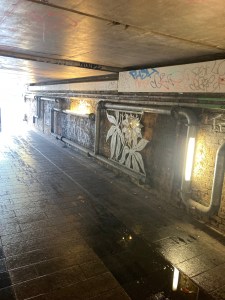
A tunnel on my walk over to Deptford from New Cross Gate. I got the overground to New Cross Gate and walked over – in spite of the rain at the start of this walk, I love a walk, however long, to form part of the journey instead of a bus or another train. The walk was a nice way to familiarise myself with the surroundings. Having grown up in Peckham, I am familiar with SE London, but had not been to some of the places on the walk.
This tunnel was wet and industrial but had these metal flower cut outs and some really cool lights embedded in old, disused pipes.
photo 2: ground level in progress
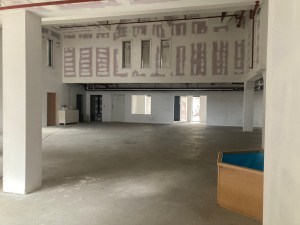
The ground floor is on its way to being a new home for a church, The Bear. The building was originally a site for the church before the redevelopment. There are some synergies between the church and the housing association, with a few key people belonging to both. The church space then may well act to host collective events for residents in the apartments above. In fact, it already has, there was a BBQ a few days before I took this photo in a small garden just behind where I was standing here.
Photo 3: a garden terrace
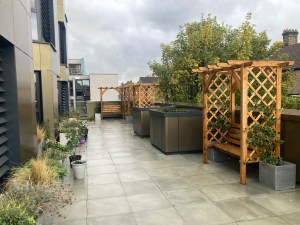
How do you create shared, communal spaces in apartment blocks that are a regularly used and collectively taken care of? Could a place like this actually be a meaningful hang out spot for connection? There are plans for events to be held here too which go some way to cultivating this connection. But it will be interesting to see how residents spontaneously use this space (and a couple of other terraces).
The two big boxes in the middle of two of the benches are actually sky lights that run down into the ground floor atrium seen in Photo 2.
Photo 4: studio kitchen
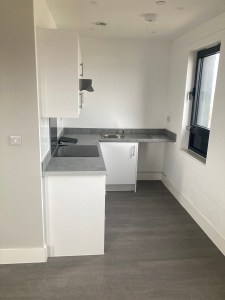
A kitchen in one of the studio flats. With studios suitable for one person, nearly everything an individual “needs” is in their own private space. There is a shared laundrette on the top floor which is a necessity, but the roof terraces and the downstairs multi-functional space don’t need to be used to function. This could be seen as good for independence and even dignity, but perhaps still isolating. I will be interested to hear from residents when I speak to them about how they feel about the set up. Now that this is built, what is the best use of it? But also: what is the best way of designing new developments to cultivate community, health and well-being?
Photo 5: stones
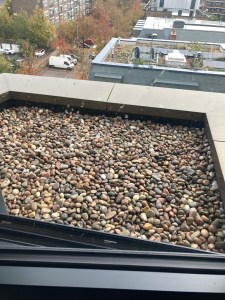
Functional in providing drainage, pleasing to look at and a nod to nature-based solutions?
photo 6: thankfulness tree

From a prior event for residents.
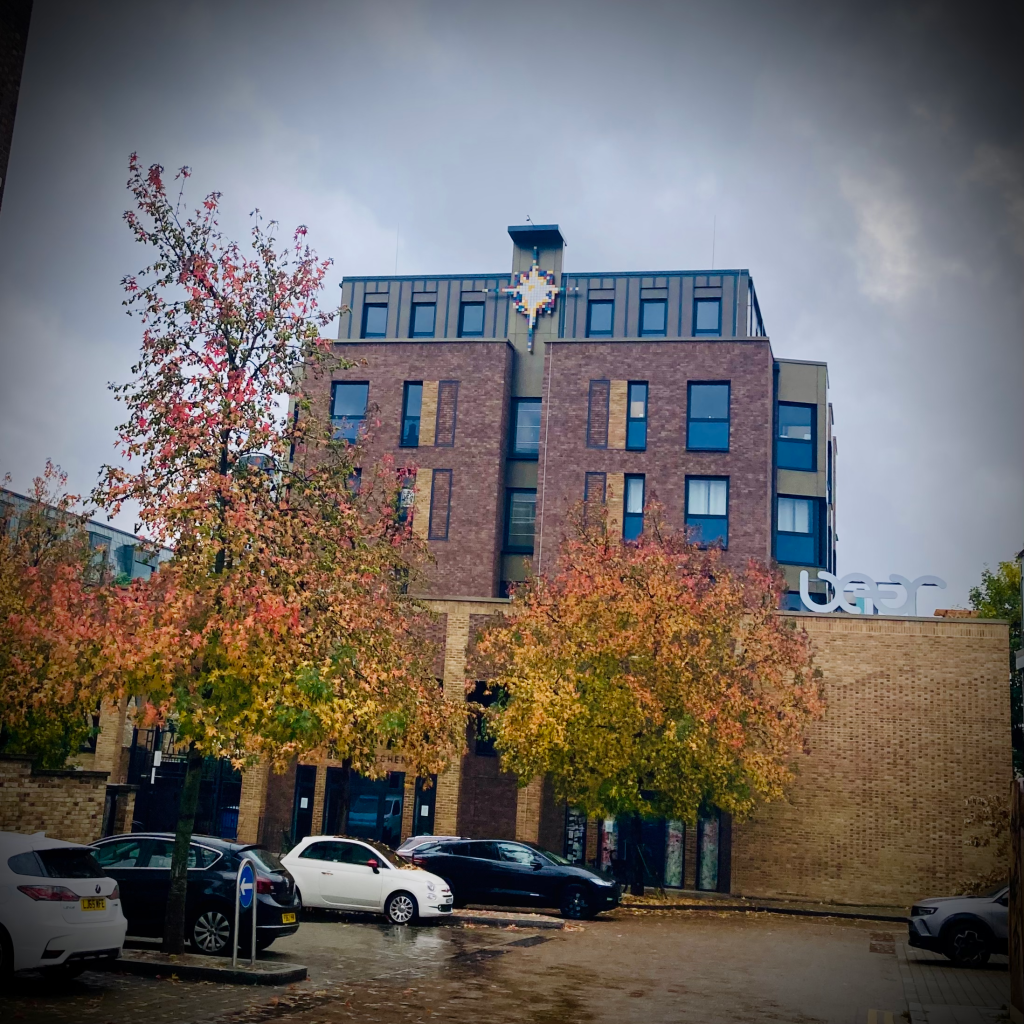
Photo 7: Bear House
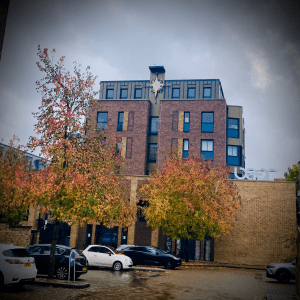
You can just make out the top of one of the wooden benches next to the “bear” sign featured in Photo 3.

Leave a comment